Anxiety, Technology, Relationships and the Loss of Inner Space
A note before reading
This article brings together personal reflections, psychological perspectives and references to selected research and theoretical approaches. It is not intended to offer definitive answers, clinical guidance or a comprehensive scientific review of the subjects discussed. The reflections expressed here are an invitation to explore some of the ways technology, emotions and relationships may be shaping our inner lives. They represent a perspective rather than an absolute truth, and are offered in the hope of opening a space for curiosity, dialogue and different points of view.
You are welcome to disagree, question or approach these ideas from another perspective. The intention is not to provide conclusions, but to encourage reflection.
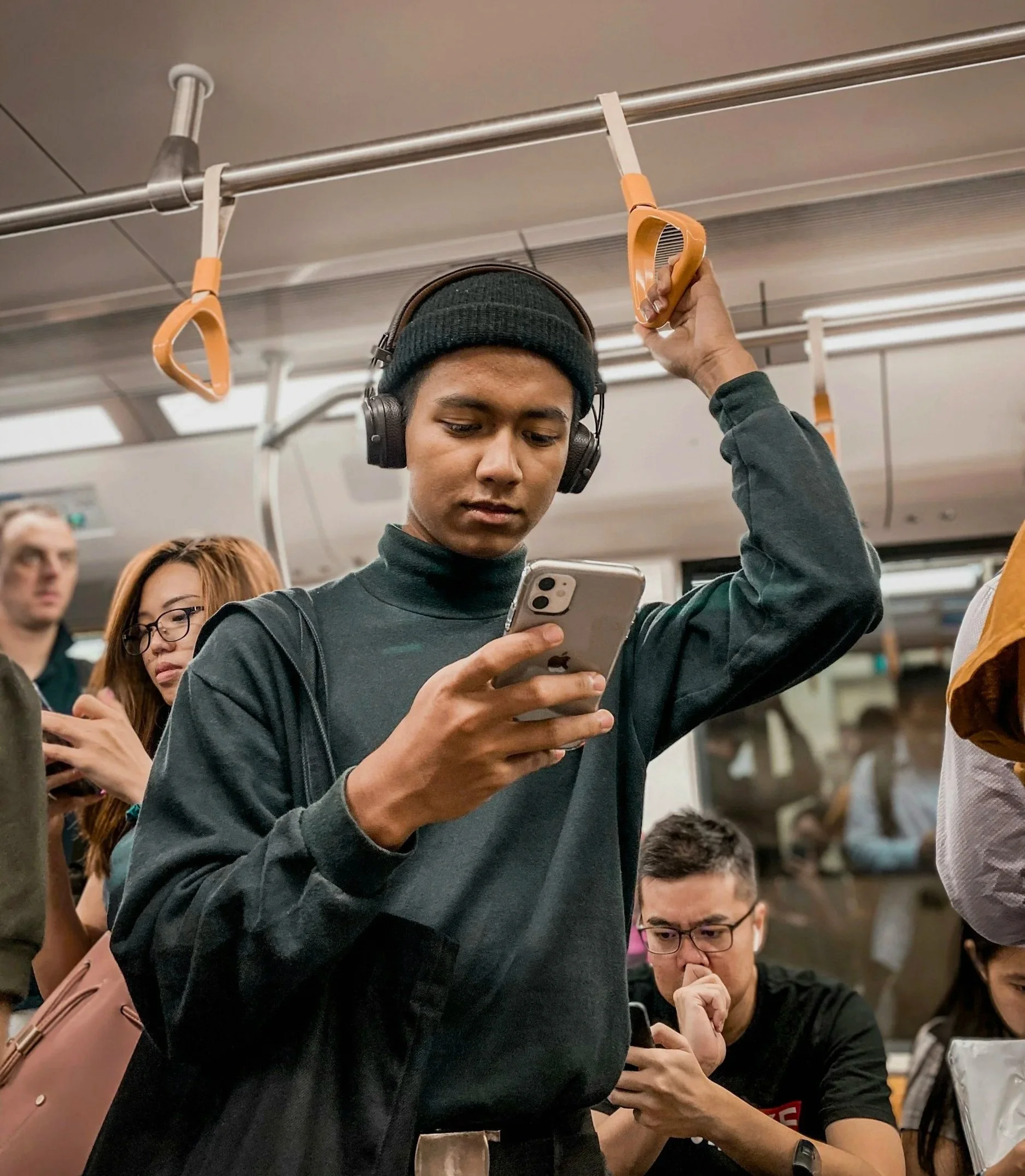
We live in a time when almost every need we have can find an answer through a single device. Technology entertains us when we are bored, offers us company when we are lonely, distracts us when something hurts, informs us when we are uncertain and reassures us when we are in doubt. It keeps us updated, offers us answers and, at least for a few moments, can give us the feeling of being seen, recognised or connected. We can seek reassurance, distraction, a pleasurable experience, new knowledge or even someone to engage with as we explore our thoughts.
At the same time, this very same tool can contribute to generating anxiety, fear, confusion, emotional overload and compulsive behaviours. It can become a source of continuous stimulation, feeding precisely those states from which we are trying to protect ourselves through its use.
Technology is a tool with enormous potential. When used consciously, it can expand our possibilities, facilitate access to knowledge, support creativity and bring people closer who would otherwise remain distant. My intention, therefore, is not to offer a negative or moralistic interpretation of its use. Rather, I find myself wondering whether this extraordinary availability might be changing something deeper in the way we live and in our very psychological experience. Not only the way we use our time, but the way we feel, think, desire, express ourselves and relate to others.
In the continuous search for stimulation, gratification, reassurance and information, we may risk losing something essential: the ability to dwell within an experience, move through the complexity of our emotions and allow what we live through to transform into something meaningful. Perhaps the problem is not simply how much we are stimulated, but how little time we allow our experience to become something more than a stimulus. We might be confusing the possibility of having continuous access to something with the possibility of assimilating what we encounter. And perhaps, precisely while we are constantly searching for something that might satisfy us, we are losing the space we need to be with what truly nourishes us.
The Engine of Emotions
Emotions are one of the forces that fuel our lives. They allow us to feel, desire, choose, connect with others and move through the world. They give intensity and meaning to our experiences, guide our actions and help us recognise what matters to us. But what happens when we feel too little? And what happens when we feel too much? Let us imagine an engine. If it does not receive enough fuel, it struggles to start and generate movement. If, on the other hand, its functioning is disrupted by an excess of fuel or faulty combustion, it can become flooded and lose its ability to run smoothly.
There are moments when desire diminishes, our energy seems to fade and the world loses its colour. We may feel apathetic, disconnected, unmotivated or distant from what is happening around us. And there are moments when emotions overlap, intensify and become difficult to contain. Anxiety can be one expression of this intense activation, particularly when we struggle to recognise and regulate what we are experiencing.
Of course, apathy and anxiety can have very different origins and manifestations. They are not simply the result of having too few or too many emotions. The body, personal history, context, thoughts, experiences and the ways in which we have learned to respond to what happens to us all play a part. Balance, however, does not depend only on the number of emotions we experience, but also on the relationship we are able to develop with them. On our ability to move through them without being overwhelmed, to recognise them without completely identifying with them, and to distinguish what is happening within us from who we are.
Emotions are bridges and meeting points. They allow us to create inner and outer connections, activate us, guide us and influence the way we inhabit the world. They are not simply something that happens inside us. They are experiences that involve the body, alter our perception, direct our attention and influence the way we relate to what surrounds us. Emotional regulation, therefore, does not consist solely of reducing the intensity of emotions. It also involves the ability to move through different states, become activated when necessary and gradually return to a greater sense of balance.
If we live in an environment that constantly invites us to react, anticipate, respond and search, we may find it harder to recognise and inhabit moments of stillness. Perhaps we are becoming increasingly familiar with activation and less familiar with rest. An emotion needs to be recognised, but it also needs to find a space in which it can be expressed, move and transform. We do not always immediately know what we are feeling, why we are feeling it or what we need. Sometimes it is precisely through time, listening, reflection and relationship that we can begin to understand what initially existed only as an indistinct sensation.
But what happens when we become trapped in certain emotional states? When we find ourselves living with persistent anxiety? When we are constantly occupied with managing what is happening inside us, there may be less space and availability to fully encounter what is happening around us. Our attention shifts towards threat, control and anticipation, while the present risks becoming secondary. In this sense, anxiety can become a condition in which the present is difficult to fully inhabit. And what if some aspects of contemporary life were contributing to amplifying this difficulty?
Emotions as the Driving Force Behind Digital Attention

The role of emotions in the way digital platforms and social media capture and maintain our attention.
The content we encounter online is not simply information. It consists of images, stories, opinions, accounts and representations capable of evoking emotions. And these contents often act as levers on our emotional dimension, precisely because digital platforms compete for a limited resource: our attention.
Some research by William Brady and his colleagues has examined the relationship between moral and emotional content, attention and the spread of information online. In particular, a 2020 study observed how moral and emotional language can contribute to the spread of content on social media. Other work by the same research group has explored how social recognition and learning mechanisms can reinforce the expression of moral outrage.
Another study, published in PNAS in 2014 by Kramer, Guillory and Hancock, examined the phenomenon of emotional contagion on Facebook. The experiment showed that modifying users' exposure to emotionally positive or negative content in their News Feed influenced, to a limited extent, the emotional tone of the posts they subsequently published.
These studies concern specific contexts and do not demonstrate that every digital interaction necessarily produces emotional contagion. However, they offer us an important insight: our attention and emotional state can also be sensitive to what we encounter through a screen.
When Emotions Become Tools of Influence
Isn't it interesting to observe how a force as intangible and deeply human as emotion can be used to influence people, shape beliefs and provoke collective reactions?
An idea can be discussed, compared and questioned. An emotion, on the other hand, can activate a response before we have even had time to fully understand what is happening. Fear can lead us to seek protection and security. Anger can push us to react to an injustice. Outrage can create a sense of belonging and unite people who share the perception of having been wronged. Hope can sustain a collective movement. Enthusiasm can turn into participation.
Emotions are therefore not only individual experiences: they also have a social and collective dimension. They can underpin solidarity, participation and change, but they can also be used to fuel polarisation, fear and hostility. We should become curious not only about how free we are to choose what we look at, but also about how aware we are of what is continually being stirred within us, a subject that deserves a discussion of its own.
Returning to the thread of this reflection, I would like to focus on a distinction: we can be continuously engaged, intrigued, outraged, moved or entertained, moving rapidly from one emotional state to another. But being emotionally stimulated does not necessarily mean coming into contact or entering into a relationship with what we feel. And experiencing an emotion does not mean that we have processed it.

We can feel outraged without understanding what has touched our sensitivity, feel moved without recognising which part of our experience has been affected, feel unsettled and immediately look for something to distract us.
The emotion is activated, produces a response and is often quickly replaced by a new stimulus. It is as though we are continuously exposed to emotional experiences, but do not always have the time to live them through fully.
Depth often emerges when we do not stop at the first response. When we can remain with a sensation, explore it, recognise its nuances and allow ourselves to be questioned by what it carries. If our attention is constantly directed towards something new, we may have fewer opportunities to go beneath the surface.
Superficiality can become a way of experiencing the world encouraged by an environment that rewards speed, reaction and constant novelty. And perhaps this is one of the most subtle aspects of the phenomenon: we do not necessarily feel less, but we may have fewer opportunities to understand what we feel.
Entering into a relationship with an emotion requires a different kind of presence. It means being able to pause, listen to what is happening within us, recognise bodily sensations and explore the thoughts and needs that accompany that experience.
An emotion can contain meanings that are not immediately accessible. When we allow ourselves the time to listen, an emotion can become a doorway towards a broader understanding of ourselves. The difference, therefore, is not simply between feeling and not feeling, but between reacting to what happens to us and developing a relationship with our experience.
Perhaps we are confusing the intensity of activation with the depth of experience. Because depth does not necessarily coincide with intensity. Sometimes it emerges through continuity, familiarity, repetition and the possibility of remaining present even when nothing particularly interesting is happening.
Our Relationship with Technology & Misplacement of Relational Needs
Modern society is experiencing an unprecedented form of relationship: the relationship, and in some ways the continuous interference, with technology. Every relationship, in some way, brings us into contact with a part of ourselves and allows us to observe how we respond to another's presence, distance, waiting, frustration, pleasure and the possibility of being recognised. Our relationship with technology, however, has different characteristics.
It is a relationship mediated by a tool that can adapt to our interests, offer us continuous stimulation and allow us to interrupt or resume an interaction almost at any moment. It does not necessarily require reciprocity and negotiation in the same way that a human relationship does.
We can choose what to look at, when to do it, how long to stay and when to walk away. We can seek company without necessarily exposing ourselves to the complexity of an encounter; obtain an answer without having to sustain a conversation; receive gratification without necessarily going through the uncertainty, waiting and effort that sometimes accompany relationships with others. It is a form of interaction that can offer us a great deal, but which often involves a lower demand for reciprocity. We do not necessarily have to confront another subjectivity, with its own timing, needs, limitations and differences.
At the same time, precisely because a single tool has become capable of responding to such a wide range of needs, we risk losing our sense of the boundaries between the different functions that were once distributed across different experiences and relationships.
The phone can become, simultaneously, a source of information, entertainment, contact, recognition, reassurance, distraction and emotional regulation. This overlap deserves deeper reflection, particularly in relation to the way we orient ourselves towards and meet our inner needs. I will explore this subject in more dephs in a different article...
The question, therefore, is not whether technology is good or bad, but what kind of relationship we are developing with it and which habits, expectations and ways of responding we are gradually consolidating.
What happens when we do not have time to move through an experience? When we do not have time to understand it, feel it and allow it to settle?
We can receive an enormous amount of information without having the time to transform it into knowledge. We can have countless experiences without being able to assimilate them and transform them into awareness. We can be continuously stimulated, but not necessarily nourished by what we encounter. We can react to countless things without having the time to understand what they have actually stirred within us.
Stimulation does not mean processing. Information does not mean integration. And entertainment does not necessarily mean rest. Perhaps this is precisely where recovering the value of empty space becomes important.

The Creative Void: A Gestalt Perspective
From a Gestalt perspective, emptiness is not necessarily a lack that needs to be filled, nor something from which we must immediately protect ourselves. It can represent a space of suspension, a moment in which what is familiar loosens and something new may still emerge.
This is what we can call the fertile void or creative void: a space of potential in which we do not yet have an answer, a form or a direction. We do not necessarily know what will emerge, but we can remain present to this possibility without having to fill it immediately. Creativity does not necessarily arise from an accumulation of stimuli. Sometimes it emerges precisely when we stop searching for something and allow what is moving within us to find its own form.
Within the Gestalt tradition, this space of not-knowing can become an important moment in the process of awareness and contact. It is a condition in which we can begin to recognise what we feel, what we desire, what we are missing or what we are avoiding.
This does not mean remaining passively in emptiness, nor idealising every form of silence or inactivity. There are moments when stillness can be difficult to tolerate, and not every experience of boredom necessarily turns into creativity. But we can try to consider the possibility that not everything that appears empty needs to be filled immediately.
Even boredom can be a threshold. When every moment is immediately occupied, we may lose the opportunity to discover what boredom is trying to communicate to us. Sometimes we need to remain long enough without doing anything to allow something new to emerge.
And yet, in contemporary life, it seems that this space has become increasingly difficult to encounter. Every period of waiting can be filled. Every moment of boredom can be interrupted. Every pause can be occupied by content. Every sensation of emptiness can be quickly replaced by new stimulation.
We have endless possibilities available to us to avoid being without something to do, watch, listen to or think about. But if every space is immediately occupied, when can something new emerge?
Integration of Emotions: What We Refuse to Feel
In this context, I find it interesting to refer to the thinking of Carl Gustav Jung and his concept of the Shadow.
Jung invites us to consider that not everything belonging to our psychic life is necessarily accessible to consciousness or compatible with the image we have of ourselves. There are aspects of our personality, desires, impulses and potentialities that we may learn to reject, hide or repress because they are difficult to accept, because they do not correspond to social expectations or because they conflict with the image we wish to have of ourselves.
The Shadow does not contain only the aspects we consider negative. It can also hold qualities, desires and possibilities that we have not recognised or have not allowed ourselves to express. What we reject does not necessarily disappear. It can continue to exist in the unconscious, influencing our reactions, our relationships and the way we interpret the world.
In his work on the Shadow, Jung emphasises the importance of recognising those aspects of ourselves that we would rather not see. The process of individuation does not consist of becoming people without contradictions, difficult emotions or uncomfortable parts, but of moving towards a greater integration of the personality.
This can also involve learning to recognise emotions such as anger, fear, envy, jealousy, sadness or resentment, without necessarily judging them or identifying completely with them.
This does not mean justifying any behaviour or allowing every impulse to find expression. Recognising anger, for example, does not mean acting aggressively. It means developing the ability to listen to what that emotion may reveal to us, understand where it comes from and consciously choose how to respond.
If contemporary culture continually pushes us towards the pursuit of pleasant, positive and gratifying states, Jungian thought reminds us that psychological wholeness does not coincide with permanent wellbeing. We do not become more integrated because we experience only pleasant emotions. We gradually become more aware when we are able to recognise those parts of ourselves that do not correspond to the image we would like to have.
Perhaps this is where we can find an important part of our growth: not in trying to eliminate what is uncomfortable or imperfect within us, but in the possibility of recognising and integrating it. We do not need to eliminate everything that disturbs us, but to recover the ability to remain in relationship even with what is difficult to feel. This requires time, presence and an inner space in which not everything has to be immediately corrected, resolved or transformed into something positive.
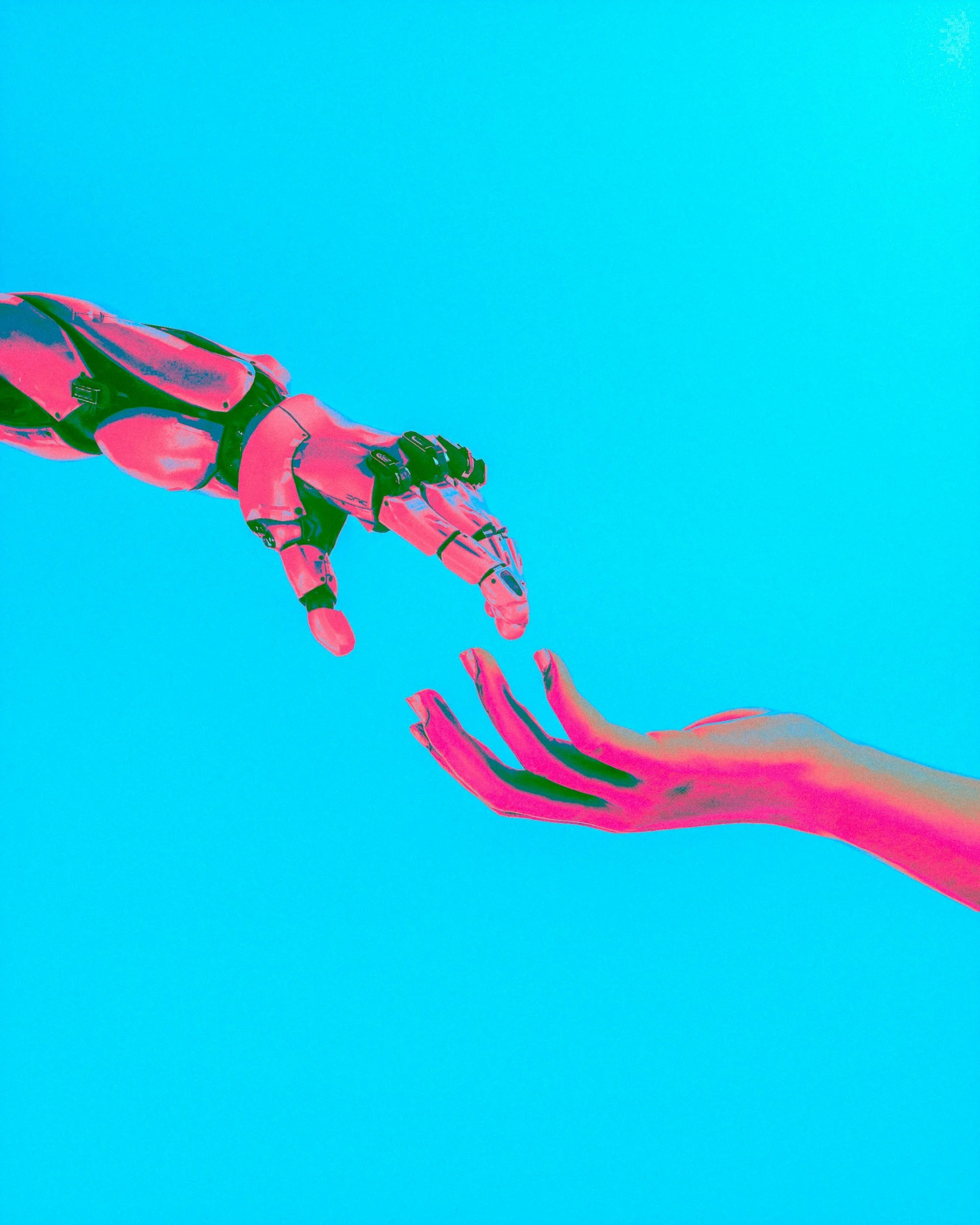
What If We Started Preferring Relationships with Technology to Human Relationships?
Recently, I have come across opinions expressing enthusiasm and curiosity about the possibility of developing relationships with artificial intelligence, sometimes even preferring them to human relationships.
I am not making a judgement about these positions. Rather, they have led me to reflect: what is it that attracts us so much to this new form of relationship? And what does it tell us about the way we experience encounters with others today?
AI can offer a space for exploration, discussion and reflection. It can help us organise our thoughts, find words for what we feel, learn and feel accompanied in certain moments. I would not want to deny the value these possibilities can have for some.
However, I believe it is important to distinguish between an interaction that may appear relational and the reciprocity of an encounter between two human subjects. An artificial intelligence system can respond, adapt to our language and offer us a form of conversational attention. But it does not experience an independent human subjectivity, with its own history, vulnerabilities, needs and capacity to be transformed by an encounter in the same way that a person can.
Human relationships are not always simple, pleasant or gratifying. They require availability, listening, the ability to tolerate frustration, to recognise the other as different from ourselves and to move through moments of misunderstanding. They bring us face to face with parts of ourselves that we do not always wish to encounter and sometimes invite us to reconsider our beliefs and expectations.
And yet, I believe that this very complexity is an essential component of our human and spiritual development. It is through encounters with others that we learn to recognise difference, develop empathy, negotiate, build trust, repair ruptures and transform the way we relate. A relationship is not simply a source of stimulation. It is a space in which we learn to transform stimulation into experience. This is not simply a matter of psychological or social development, but also an opportunity for inner growth: encountering another person means coming into contact with something we cannot control, possess or completely reduce to ourselves.
In this sense, I find a connection with Jung's reflection on integration. Growing also means coming into contact with what is unfamiliar to us, with what challenges us and with those parts of ourselves that may emerge precisely through encounters with difference.
In her work Alone Together and later in Reclaiming Conversation, Sherry Turkle explored the way digital technologies can change our expectations of conversation and relationships. One of her best-known observations concerns the possibility that we may begin to expect more from technology and less from people. Conversation does not serve only to communicate what we already know. It is also through conversation that we discover what we think and feel. When we speak with someone, we cannot always predict where the conversation will lead. The other person may introduce something unexpected, ask us a question we had never considered or show us a different perspective. This process requires a willingness to be changed by the encounter.
But if we become accustomed to interactions that are increasingly controllable, customisable and easy to interrupt, what happens to our ability to be surprised by another person? And what if, gradually, we began to prefer experiences in which we do not have to confront the complexity of a real presence?
I do not believe this necessarily happens to everyone who uses artificial intelligence to seek companionship or support. But I wonder whether, in some cases, the desire for relationships that are increasingly simple, immediate and free from friction might risk depriving us of precisely those opportunities for confrontation and transformation that make human relationships meaningful. In our desire to make interactions increasingly simple and controllable, we might gradually risk losing contact with something that gives meaning to our existence: the possibility of truly encountering another person, in their otherness and imperfection. This is another reflection I will explore further.
Immediate Gratification and the Ability to Tolerate Effort
The distinction between gratification and satisfaction.
Gratification can be immediate. Satisfaction, on the other hand, often arises from a process. Think of a relationship, a creative project or learning something new. These are not always pleasant experiences. They require time, commitment, patience and a willingness to encounter obstacles. We may go through moments of frustration, uncertainty, boredom and effort. And yet, it is precisely through this process that we can develop a sense of competence, confidence and fulfilment. Satisfaction is not only the result. It is also the recognition of what we have gone through to get there.
Technology can offer rapid gratification without necessarily requiring the same investment. This does not mean that every experience has to be difficult or that immediate gratification is always negative. The problem may arise when gratification becomes the predominant way in which we respond to our needs. If we become accustomed to obtaining something without going through a process, what happens to our ability to sustain those processes that require time, commitment and perseverance? If every difficulty can be immediately avoided, how do we learn to recognise the satisfaction that comes precisely from having moved through it?
Effort can also be a form of relational investment. Listening when we are tired, staying in a difficult conversation, addressing a conflict, apologising, repairing a rupture, waiting for the other person to be available. This is not necessarily an effort that impoverishes us. It can be an effort that generates meaning.

Technology as a Mirror of Our Needs
I would like to return to a starting point: technology is not an external enemy invading our lives. It is also the product of our needs, aspirations and vulnerabilities. We seek connection, recognition, security, curiosity, pleasure and belonging. These are profoundly human needs.
Technology responds to these needs in ways that can be genuinely useful. It can allow isolated people to connect, offer support to those who do not have it, facilitate learning and open up creative possibilities.
But precisely because it is so accessible and versatile, it can become an automatic response to every form of discomfort. Perhaps the issue is not only the amount of time we spend in front of a screen, but also the way we relate to our inner needs. A need often begins as a sensation, an emotion, a tension or a desire that we do not yet know how to define. Understanding it may require us to pause, listen and distinguish a momentary impulse from a deeper desire, an immediate necessity from something that requires greater attention.
When, instead, every sensation finds an immediate response through a device, we risk skipping precisely that step. The problem is not necessarily what we find. It is the possibility that we stop listening to the need that led us there. We may begin to use technology not only to satisfy a need, but also to avoid feeling it. Relief is not necessarily understanding. Satisfying a need does not always mean that we have understood it. And distracting ourselves from a sensation does not mean that we have transformed what that sensation was trying to communicate to us. What am I trying not to feel when I am constantly looking for something to watch?
I Am Not Immune
I, too, feel an attraction towards technology that, at certain moments, I do not recognise as a genuine desire. It is something that draws my attention, promising gratification, an escape, a pause from the heaviness and pressing demands of certain moments in life. A possibility of disconnecting, even if only for a few moments, from what I feel or from what is asking for my presence. I notice how some gestures have become automatic. My hands reach for my phone when I feel an emotion approaching. My mind suddenly finds something to check: my bank account, the shopping list, emails that need answering. A sense of urgency appears, a feeling that I need to do something, even when I know that, in reality, nothing requires an immediate response.
Sometimes I ask myself what am I trying to reach, avoid or perhaps simply not feel when the urge to scroll takes over… My answer is that sometimes it feels as though I am seeking the illusion of filling a sense of loneliness, disconnection, discomfort or isolation. Especially in those moments when everything around me seems unaware of my presence. And perhaps the most difficult part to recognise is that, at times, I am the one who fails to notice myself.
I then find myself wondering about the deeper meaning of this transformation and the place technology will occupy in the lives of future generations. We are experiencing this transition particularly intensely: we grew up in one world and find ourselves inhabiting another, without necessarily having had the time to fully understand what we are leaving behind and what we are becoming.
Grief, loss & the Memory of a different World
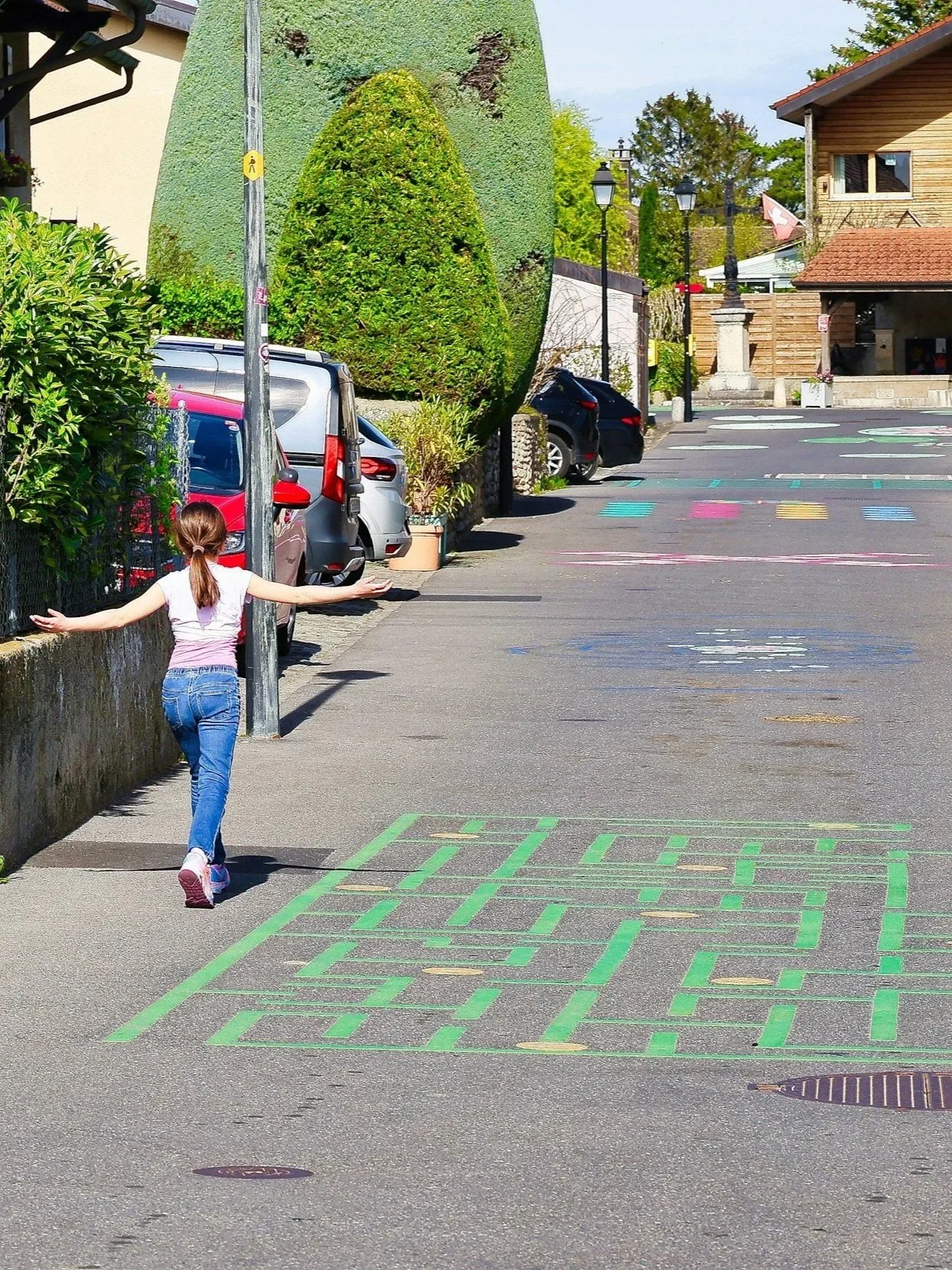
Within me, the memory of a very different world still lives, a world I find difficult to let go of.
A world in which people were accessible primarily through physical presence, where we did not necessarily have to arrange an online appointment to meet. We played in the streets, invented games using simple things and spent time together.
I miss that dimension. Not because it was a perfect world, nor because everything belonging to the past was necessarily better, but because I recognise in that way of living something I find more difficult to encounter today: a form of spontaneous closeness, mutual availability and shared time that did not have to be constantly organised, interrupted or filled.
Some days, I feel a sense of loss inhabiting me. And I wonder whether this transition, too, needs to be processed, whether there is a form of collective grief that we are going through without having yet given it a name.
In a short space of time, we have profoundly changed the way we meet, communicate, play, work and inhabit time. We have adapted, learned new languages and discovered new possibilities, often at an astonishing speed. But how much space have we left to feel the difficulties of this transformation? How much have we been able to recognise what we have gained, but also what we have lost?
Perhaps some parts of us are still attached to a different way of living, while other parts are trying to adapt to the possibilities of the present. And within this coexistence, contradictions, nostalgia, curiosity, enthusiasm and discomfort can emerge. We can desire continuous connection and, at the same time, feel profoundly disconnected. We can have access to countless people and miss real presence. We can always be reachable and yet experience a form of loneliness that we do not quite know how to name.
I hope these reflections can offer a space for thought and discussion. My intention is not to propose definitive truths, nor to convince anyone to necessarily share my point of view. Rather, I would like to stimulate deeper reflection, offer questions that can open inner doors and invite us to observe aspects of our experience that, in the speed at which we live, we may risk not listening to.
If this resonates with your experience, I offer trauma-informed somatic counselling in Brighton and online, supporting people to move from reactive relational patterns to embodied, authentic connection. You’re welcome to book a free discovery call to explore working together.