Build your Arc before the storm. The Self Doesn’t Need Fixing.
I often find myself reflecting on bigger patterns than the individual ones.
Perhaps because, through my work, my life and my own experiences, I notice how continuously we seem to orbit around the same very simple questions. Questions that appear to be answered every time something new comes along: a new approach, a new theory, a new guru, a new specialist, a new technique, a new way of understanding ourselves.
And yet, somehow, the questions remain.
How do I stop feeling this? How do I resolve this?
How do I get rid of my anxiety? How do I overcome my grief?
How do I regulate myself? How do I finally become the person I am supposed to be?
There is something interesting in our ongoing search for solutions.
We seem to have become conditioned to believe that there must be an answer to almost everything we experience internally. That when something feels uncomfortable enough, there must be something we can do to make the discomfort stop. And perhaps sometimes there is.
But I wonder what happens when the desire for a solution becomes, in itself, another way of avoiding the experience.
There is a paradox here: the same energy that keeps us invested in what we do not want can become the energy we use to demand that it changes. We turn towards change with the same urgency with which we have been trying to maintain control. We resist what is, and then we resist the fact that it has not yet become something else.
Perhaps the direction changes, but the relationship remains the same. We are still trying to move away from what we are feeling.
And perhaps this is where something becomes worth exploring: what happens when, instead of immediately trying to change the experience, we allow ourselves to become curious about what it is asking us to feel, understand or hold?
What is so uncomfortable about feeling that we need to resolve what we are feeling almost immediately? Why is uncertainty so difficult for us to remain within? Why do we find contradiction so hard to hold? Why do we so often feel compelled to choose one side of ourselves over another?
Perhaps because feeling something deeply asks something different of us than solving it does. A solution can bring relief. Resolution can create the feeling that we have arrived somewhere.
But complexity does not necessarily disappear because we have found a temporary resolution to it. In fact, the complexity itself is not the problem. Perhaps the problem is that we don't have enough space within ourselves to hold it.
We can love someone and be angry with them. We can want change and simultaneously grieve what we are leaving behind. We can know something intellectually and still not be ready to live it. We can feel relief and sadness at the same time. We can want to move forward while another part of us is still looking backwards. We can understand something with the mind while the body continues to tell a different story. And this ongoing tension between what we think, what we feel, what we want and what we are able to hold is not evidence that something is broken, it could be that it is simply part of being human.
I am increasingly interested in what exists in between. Not necessarily choosing one side over another, but becoming curious about the space between them.
There are moments when discernment is essential. Sometimes we do need to see something clearly from one side. Sometimes we need to make a decision, create a boundary, leave, stay, act, or say no. But there are also moments when the attempt to arrive too quickly at one answer fragments something that needs more time. Perhaps some experiences need to be lived before they can be understood. Perhaps some contradictions need to be held before they can be resolved. And perhaps some things don't need resolving at all. They need space.
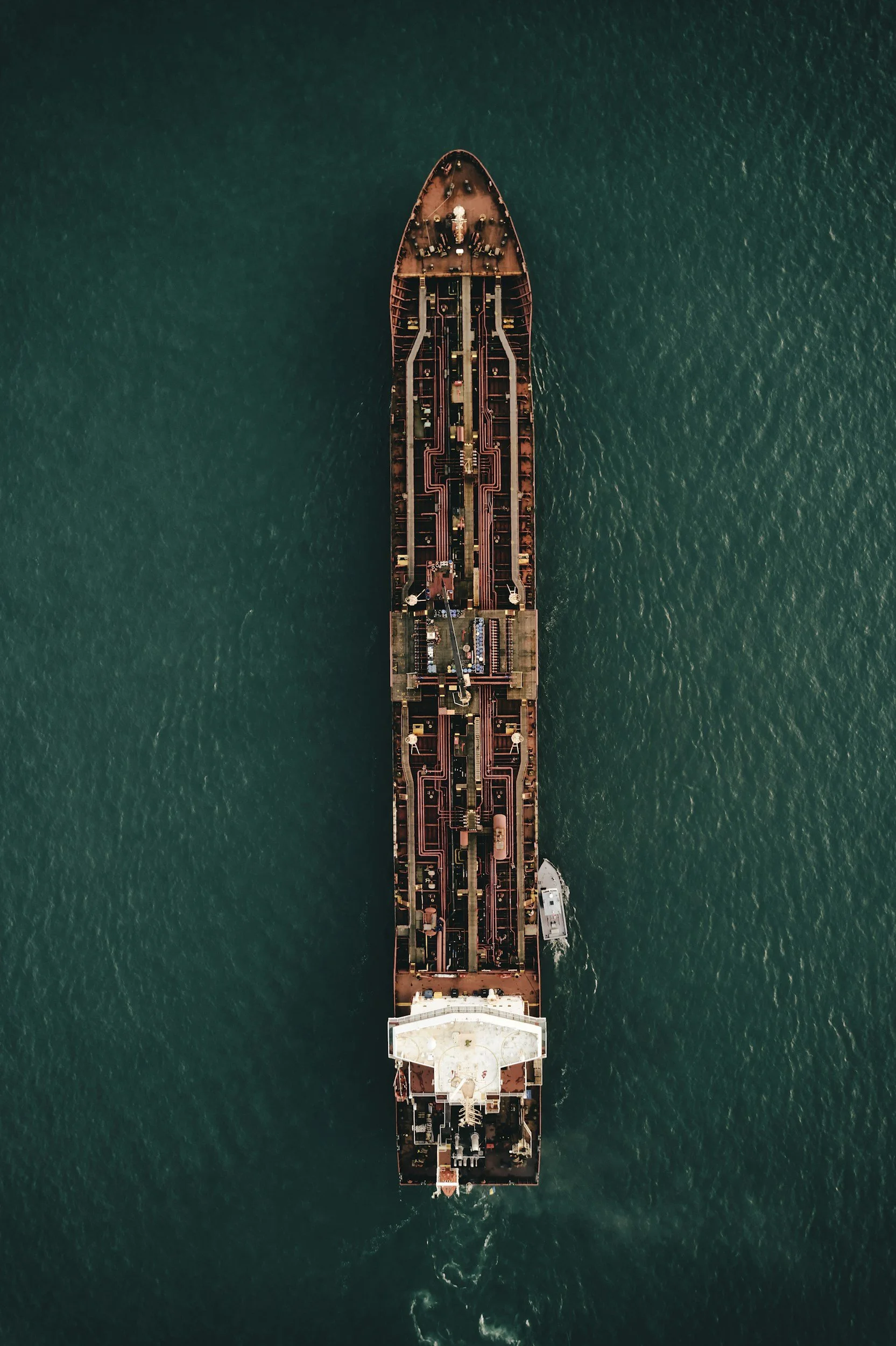
The vessel
This is where I find myself returning to the metaphor of the ark. I have always been drawn to the Bible as a book of metaphors and stories, as a collection of images that can speak to different layers of human experience beyond doctrine or religious interpretation.
The story of Noah's ark has always held something interesting for me. The ark was built before the storm. The vessel was created when the weather was still good.
There was no flood yet. No immediate crisis demanding that something be constructed. There was time to build something substantial enough to carry life through what was coming, and this is one of the most powerful metaphors for our own inner lives.
We often seek shelter when the storm has already arrived. We seek help when the emotion has already become overwhelming. We search for answers when we are already drowning in questions. We reach for something to hold us when the water is already moving beneath our feet.
But what if the vessel could be intentionally built beforehand? What if emotional capacity is not something we can simply summon when the storm arrives? What if we need to develop a structure within ourselves that has learned how to carry intensity before we are asked to carry something immense?
The ark, as a metaphor, is not about stopping the storm. It is not about controlling the water. It is not about creating a world in which nothing difficult happens. It is about creating something strong enough to hold what is inside it while the waters move. And perhaps our internal world is not so different.
We contain different parts of ourselves, different states, different impulses, different desires, different memories, different ways of knowing. The story speaks of animals entering the ark in pairs, and I find something deeply symbolic in this image of difference being held within the same vessel. Different species. Different instincts. Different forms. Opposites.
Life in its multiplicity, gathered into one structure. Maybe this is also what we are being asked to learn within ourselves. Not to eliminate differences. Not to make every part agree. But to develop a vessel capable of holding what appears contradictory without immediately needing to destroy one side of the experience.
When the water gets rough
Emotions carry intensity. They have a charge to them. Grief can have a charge. Anger can have a charge. Despair, fear, longing, shame, excitement, even profound joy and happiness can sometimes become more than the structure we currently have can comfortably hold.
And when the intensity exceeds our capacity, something happens. We may discharge it. Suppress it. Intellectualise it. Avoid it. Act it out. Disconnect from it. Or become frightened by the experience itself. Sometimes we are not only afraid of the emotion. We are afraid of what we believe might happen if we allow ourselves to feel it.
I often wonder if somewhere along the way we have witnessed people who could not hold their own emotional intensity safely, or we grew up in environments where strong emotions were punished, denied, feared, or became destructive.
I wonder if we have learned that anger is dangerous. That grief is too much. That vulnerability makes us weak. That uncertainty must be resolved. That if we allow ourselves to feel something fully, we might lose control. And so the emotion itself becomes the problem. But feeling an emotion is not the same as being compelled to act from it. Feeling anger does not necessarily mean we need to become aggressive. Feeling grief does not mean we will remain broken. Feeling fear does not mean that danger is present. Feeling uncertainty does not mean that something has gone wrong. An emotion can be information.
It can be movement. It can be the system communicating something that has not yet found another way to be expressed. But information can be overwhelming when the vessel receiving it does not yet know how to hold it. This is why I think the question of capacity is so important.
Not: “How do I get rid of this feeling?” But: “How much of this experience can I remain present with?”
Not: “How do I stop this?” But: “What would allow me to stay with this without being consumed by it?”
The difference may appear subtle. But it changes the relationship we have with ourselves.
In my twenties, I remember practising meditation centred around three temples of the self: the body, the mind and the spirit.
At the beginning, the meditation lasted around an hour. I would move slowly through the different layers, learning to notice what was happening within each one. Over time, something changed.
By the end of the year, I could touch into those different layers within a minute. It wasn't because I had somehow solved myself. It was because I had become familiar with myself. I had learned how to move. From the body to the mind. From the mind to the spirit. From one state to another. From one layer of experience to another. And perhaps one of the most important things I learned through that practice was that none of these states were my identity. They were states. They were experiences moving through me.
Sometimes I would become stuck in one. Sometimes I would remain there for longer than I wanted. But instead of immediately interpreting that as failure, I could become curious about the fact that movement had stopped.
What was keeping me there? What was asking to be felt? What had not yet been understood? What was my system trying to express?
I wonder if psychological and spiritual development is not about becoming permanently calm, permanently balanced, or permanently healed. Perhaps it is about learning how to move. Learning how to remain present without becoming completely identified with the state we are experiencing.
Learning that I can experience anger without becoming only anger. That I can experience grief without becoming only grief. That I can experience fear without making fear the definition of who I am. And sometimes I may remain there for a while. That is part of the process too.
The diamond
There is something else I have learned over the years. When I can stay present with a feeling without immediately trying to override it, resolve it or make it disappear, something often becomes visible that I could not see at the beginning. I sometimes think of this as the diamond within the emotion. Not because every painful experience has a lesson. Not because suffering automatically makes us wiser. And not because there is always something beautiful waiting at the end of pain. But because when an emotion has enough space to move through us, something may become available.
A boundary I had not recognised. A truth I had avoided. A relationship I had been seeing from only one perspective. A desire I had not allowed myself to acknowledge. A grief that needed to be felt rather than explained. Something about myself that had been hidden in the shadow. The diamond is not necessarily a solution. It may simply be a deeper knowing. And this takes time. It requires enough capacity to remain with the experience without immediately demanding that it become something else.
This is why I have become increasingly interested in the difference
between understanding and integration.
We can understand something and still not be able to live it. We can know something intellectually while another part of us is still catching up. The mind can arrive somewhere long before the body does. An insight can happen in a moment, while its integration can take years. And perhaps there is nothing wrong with that. Perhaps the different parts of us move at different speeds.
What if the self doesn't need fixing?
What if what needs developing is the vessel? The capacity to hold more. More intensity. More complexity. More contradiction. More uncertainty. More grief. More desire. More of the parts of ourselves that we have been taught to separate, suppress or resolve. The ark does not stop the storm. It does not control the water. It does not make uncertainty disappear. It simply creates enough stability for life to remain inside it while the water moves. And perhaps this is something we can practise when the weather is good. Not because we are preparing ourselves to become invulnerable. But because we are developing familiarity with the different landscapes within ourselves.
Learning to feel. Learning to notice. Learning to move. Learning to stay. Learning when something needs action and when something simply needs space. Learning that not every feeling requires an immediate response. Learning that not every contradiction needs to be resolved. Learning that we can experience opposing truths without necessarily fragmenting ourselves.
Spiritual work carries an element of commitment to life itself.

This is also why I have become less interested in the idea of healing as a destination. After many years of walking my own path, trying to understand, trying to be, trying to navigate the complexities of life…
I have come to see that fatigue is part of the journey.
Discomfort is part of the journey. There are moments when the path feels pointless. There are moments when we are tired of trying to understand. Moments when we question the direction. Moments when something stretches the boundaries of who we thought we were and takes us somewhere we didn't expect to go. I don't necessarily see this as a negative edge of the journey. But neither do I think we need to romanticise suffering.
Sometimes life is simply difficult. Sometimes growth is uncomfortable. Sometimes we are asked to expand beyond what is familiar, and that expansion can temporary hurt.
the Spiritual work carries an element of commitment to life itself. A willingness to remain in relationship with what life brings, even when we don't understand it, even when it is tiring, even when we don't know where it is taking us. There is no final version of ourselves waiting at the end of this.
No fixed destination where we can finally say: I have healed. I have overcome life. Everything makes sense now. Everything feels good.
Healing is something much more ordinary and much more demanding. Perhaps it is the gradual development of a vessel capable of holding what life actually is. Perhaps the goal is not to become someone who never feels overwhelmed. Perhaps it is to increasingly trust that when the waters become rough, we have somewhere within ourselves to remain.To remain whole enough for the water to move and that is where the work begins.
If this resonates with your experience, I offer trauma-informed somatic counselling in Brighton and online, supporting people to move from reactive relational patterns to embodied, authentic connection. You’re welcome to book a free discovery call to explore working together.