When Fear Becomes the Primary Driver of Our Relationships
What Does It Mean to Relate From Fear?

One thing I have been noticing more and more in my work, and which has also become a central part of my own daily reflection, is the nature of our connections, the invisible strings that bind us to one another. I have become increasingly attentive to what connection actually feels like with different people, in different situations, and to the often contrasting emotions that emerge from those experiences.
I often write about how our emotional world and the personal lenses through which we interpret reality inevitably shape the quality and sustainability of our relationships. This time, however, I want to explore something that I believe sits beneath many of the struggles we experience with others: fear-based connection.
What do I mean by a fear-based relationship?
I don't necessarily mean relationships that are abusive or unhealthy. Rather, I mean relationships in which fear, rather than love, curiosity or authenticity, becomes the organising principle. We may genuinely care about the other person, yet much of what we say and do is unconsciously driven by the need to avoid emotional pain. Instead of asking, How do I want to relate?, we find ourselves asking, often without realising it, How do I protect myself?
When the Past Quietly Enters the Present
Over the past few years I have become increasingly aware of what I now call my "fear reactions." Sometimes, during a conversation, I say a word or make an offhand comment and, almost instantly, something shifts inside me.
I find myself thinking, Why did I say that? Where did that come from? Within seconds a familiar spiral begins. I notice myself worrying. My body tightens. My thoughts start racing. Suddenly I feel exposed, vulnerable and afraid. Rather than dismissing these moments, I became curious about them. I wanted to understand what was happening beneath the surface.
What I eventually discovered was that I wasn't really afraid of the conversation itself. I was afraid of being abandoned, misunderstood, judged or labelled in a way that would distort how I see myself. Have you ever experienced something similar?
In those moments I am no longer relating to the other person who is actually in front of me. Instead, I have already travelled into an imagined future where they reject me, think badly of me or no longer want anything to do with me, all because of a sentence that escaped my mouth before I had the chance to filter it. My attention moves away from the relationship and becomes absorbed by my own fear. I am no longer responding to reality; I am responding to prediction.
A Seven-Year-Old Trying to Stay Safe
As I sat with these experiences, more questions emerged. What did I actually say? Where is the other person in all of this? Can I repair it if I need to? Did they even notice? Are they genuinely upset, or is my nervous system filling in the blanks with old assumptions? What a remarkable journey the mind can take within just a few seconds.

When I stayed with those questions long enough, I realised that I was no longer an adult having a conversation. I had become a seven-year-old girl again, worrying that whatever I said would upset my parents and that I would be punished for it. This is what I now think of as a fear spiral. It is one of those moments when the present quietly disappears, and the past begins organising our experience without us even noticing.
As a child I learned to watch my mouth, to anticipate consequences and to carefully filter my emotions in order to stay safe. Those strategies were intelligent adaptations. They helped me survive within the environment I grew up in. But what once protected me can still appear today, even when the danger is no longer present. Often, when I come back to myself, I realise that what happened was simply an innocent remark that could have been interpreted in different ways. It wasn't nearly as catastrophic as my body had convinced me it was.
How Childhood Shapes Adult Relationships
Developmental psychology and attachment theory remind us that many of the ways we relate as adults were first learned as strategies for survival. Our nervous system does not simply store memories; it also stores expectations. If connection once felt unpredictable, conditional or unsafe, we may continue scanning for those same dangers long after our circumstances have changed.
Fear doesn't simply influence how we feel, it changes how we perceive. Neutral expressions become rejection. Silence becomes abandonment. Feedback becomes criticism. We stop relating to the person in front of us and begin relating to the ghosts of relationships that came before.
I adapted, as many children do, and in doing so I compromised parts of my authenticity in order to survive. Today those fears still appear from time to time. Sometimes I still feel ashamed that they exist at all. Yet I also know them now. I recognise them sooner. I have learned that the goal is not to become a perfectly edited version of myself, free from mistakes or vulnerability. The goal is to become someone who can notice when fear has taken over, repair where repair is needed, and welcome those younger parts of myself with compassion rather than rejection. That part of me belongs too.
When Protection Disguises Itself as Love
Perhaps this is one of the reasons relationships can feel so challenging and overwhelming. If we have not experienced much of what it feels like to connect from a place of emotional safety, we may find ourselves relating primarily from fear instead. Fear of abandonment. Fear of rejection. Fear of conflict. Fear of shame. Fear of loneliness. Fear of being controlled. Fear of not being enough. Although these fears express themselves differently from one person to another, they often share the same roots.
When fear becomes the organising principle, behaviours that appear to be expressions of love are often strategies of protection. One person becomes critical because criticism feels safer than vulnerability. Another withdraws because distance feels safer than disappointment. Someone else becomes highly accommodating, hoping that if they are always kind enough, helpful enough or agreeable enough, they will never be left. Another becomes controlling because certainty temporarily calms an anxious nervous system. On the surface these behaviours look completely different, yet underneath they may all be asking exactly the same question: Am I safe? Will you still stay with me?
This is also why I have become increasingly interested in the difference between connection and protection. We often believe we are relating to one another, yet much of the time we are simply trying to manage our own fear. We defend, explain, justify, avoid, please, blame or withdraw—not because we do not care, but because our nervous system has mistaken intimacy for danger.
Choosing Curiosity Instead of Blame
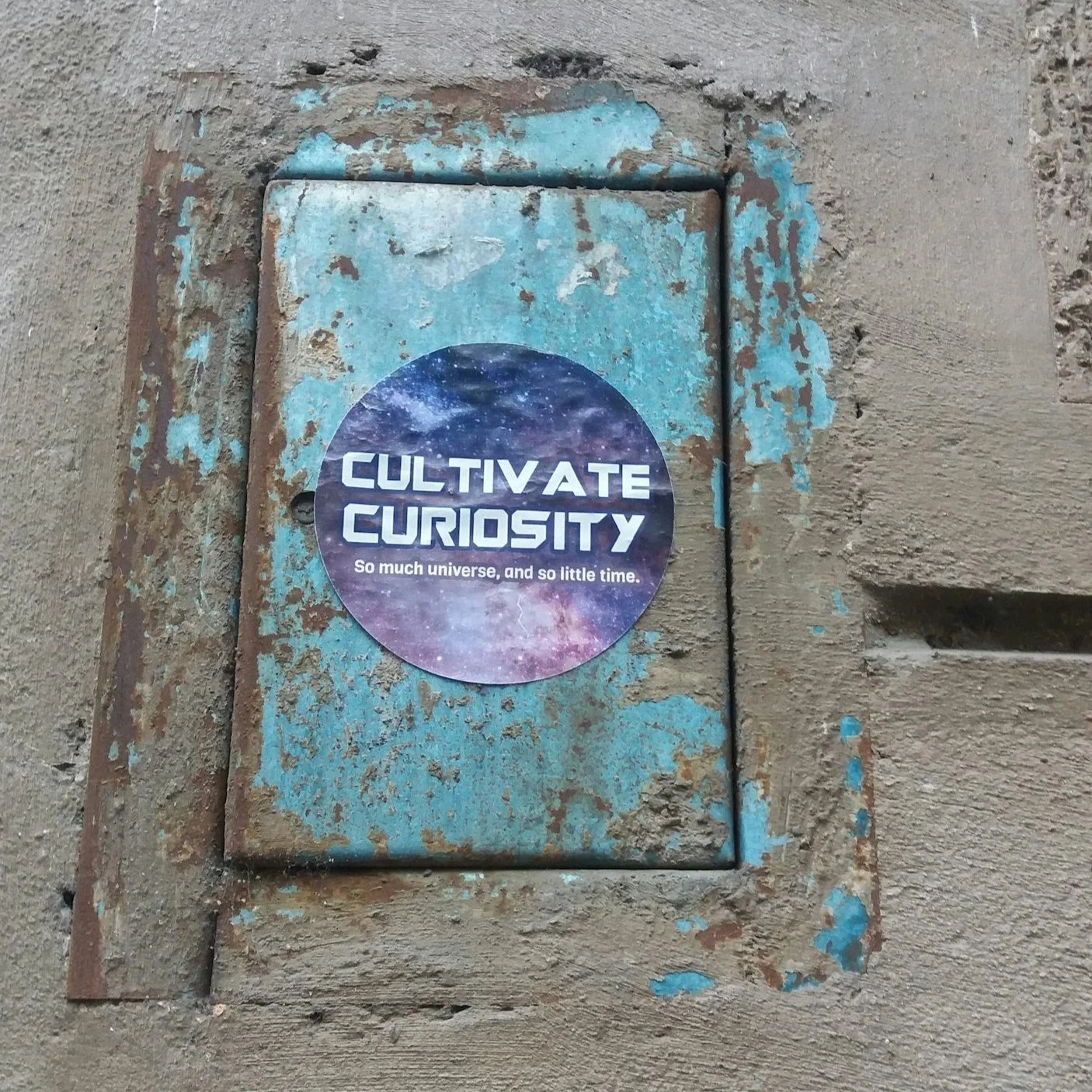
What I also reflect on more and more is how quickly we hand responsibility to someone else. It's because of them. They're not aware enough. They're too sensitive. They're bothering me. They're making me feel this way.
While there are certainly situations where people behave harmfully and accountability is necessary, I also wonder how often our own emotional history quietly colours the way we interpret what is happening. I believe one of the qualities we need to reintegrate into our relationships is a deeper sense of compassion, curiosity and humility. Before assuming we know what the other person intended, perhaps we can become curious about what is happening inside ourselves.
Nothing truly changes in isolation. We can spend years repeating the same relational patterns without ever questioning the fears that sustain them. Healing begins when we are willing to name what lies beneath the reaction, become curious about what our fear is trying to protect, understand where it originated, what keeps it alive, and whether the strategies that once served us are still serving us today.
Awareness alone is rarely enough, but without awareness it is difficult for anything else to change.
Healing Happens Through Relationship
It sounds simple, and I know it isn't. Our protective strategies developed over many years, sometimes decades. They live not only in our thoughts but also in our bodies, our nervous systems and our expectations of other people. This is why genuine change requires more than insight. It asks us to experience relationships differently. To risk being seen. To tolerate uncertainty. To remain present when everything inside us wants to run, defend or disappear.
This, perhaps, is where I witness some of the most meaningful shifts in adult relationships. We become a little less afraid of vulnerability. We learn to stay in difficult conversations for a little longer. We become more capable of listening without immediately defending ourselves, labelling the other person or shutting down. We discover that repair is often more powerful than perfection.
Have We Forgotten How to Repair?
I also wonder whether this has become a wider cultural challenge. As many of the social containers that once held our relationships have weakened, we often have fewer opportunities to practise repair. It has become easier to leave, to replace, to disconnect, to move on, than to stay with discomfort long enough for something new to emerge.
I don't believe the past was necessarily better, but I do wonder whether we have become so skilled at protecting ourselves that we are slowly forgetting how to remain in relationship while fear is present.
Can we soften, both towards ourselves and towards others? Can we give people the benefit of the doubt when it is deserved? Can we become just a little more curious before assuming we know the whole story? And perhaps the deepest question of all: can we learn to recognise when fear, rather than love, has quietly taken the driver's seat?

From Fear
to Authentic Connection.
Life becomes meaningful when we begin healing these long-standing relational patterns. In many ways, we are pioneers, searching for healthier ways to love, to communicate and to belong. As we explore, we will inevitably misunderstand one another, make assumptions, say the wrong thing and get it wrong from time to time. That is not the opposite of relating; it is part of relating.
Healing relationships is not simply about changing ourselves as individuals. It is about healing an entire ecosystem—our families, our friendships, our communities and, in some small way, the wider world.
Fear may always visit us. The question is no longer whether it appears. The question is whether we allow it to lead the relationship, or whether, with enough awareness and compassion, we gently choose another way.